
Why Practise Restorative Yoga?
Claire Martin Luxton | NOV 20, 2019
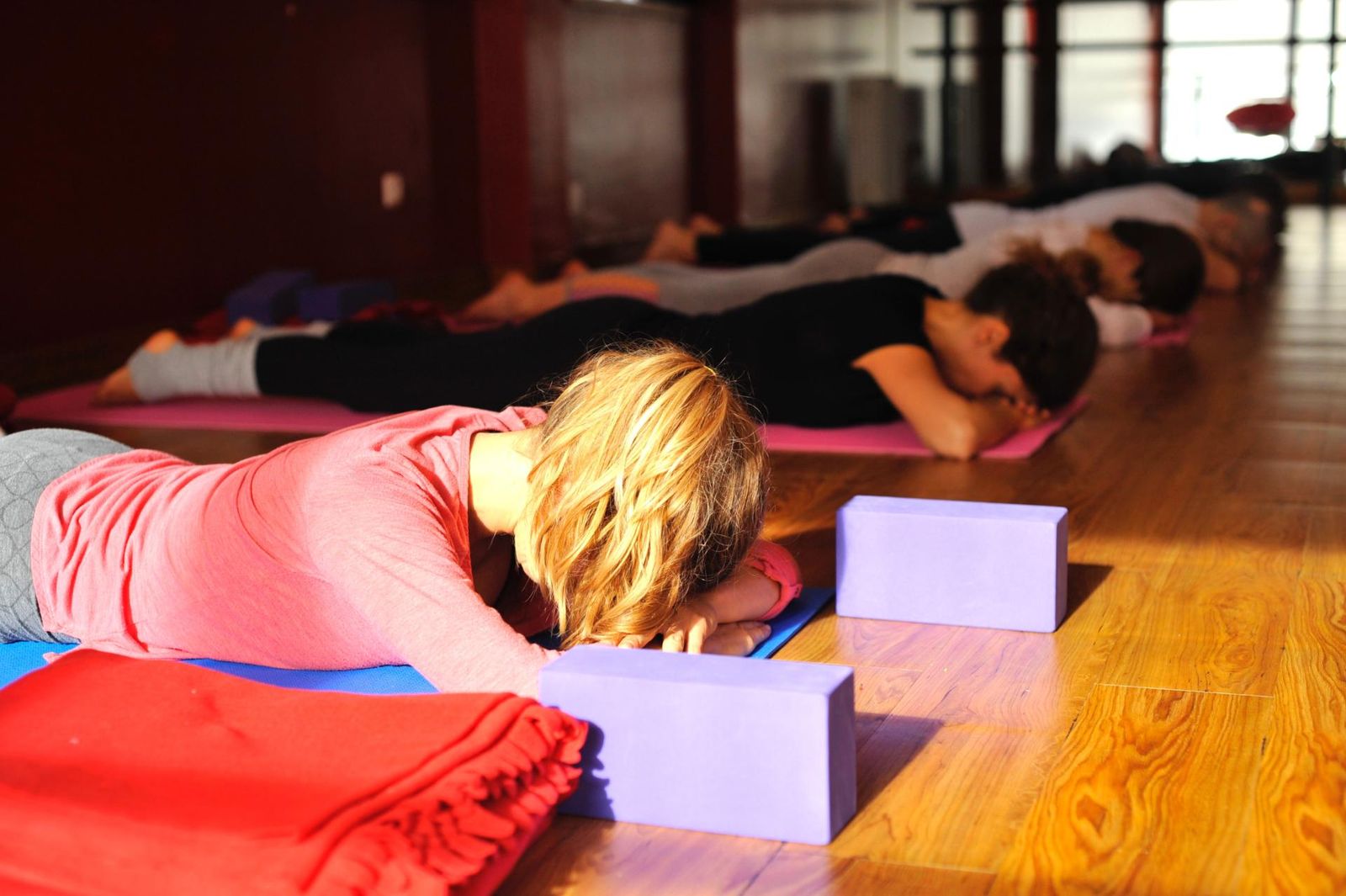
What is Restorative Yoga?
“We have an ancient body subjected to a modern problem: living with chronic stress.”
— Judith Hanson Lasater
The practice is rooted in Iyengar Yoga, developed by B.K.S. Iyengar who initially experimented with supporting the body with props to create a practice that was more accessible to those with illnesses or limited mobility.
Restorative Yoga offers various modified, supported yoga postures in a calm, comfortable yin environment. These postures gently encourage the spine to move in different directions – forward bends, back bends and twists – helping to create balance.
When practising Restorative Yoga, the aim is to move into a state of ‘being’ rather than ‘doing’. If you look at your typical day, you will find that most of it is dedicated to doing something – juggling responsibilities, giving of yourself as an employee, employer, parent, sibling, spouse or friend, doing your job, performing house-hold chores, paying bills, taking care of admin, all the while thinking and analysing as you go. In addition, life has gathered such speed with the use of technology, that most of us now multitask at levels we’ve never seen before. And with the exponential use of social media, the internet and a lot of our day-to-day activities moving into virtual online space, we find ourselves frequently ‘plugged in’ and ‘switched on’.
This type of lifestyle creates a lot of tension and stress on physical, mental and emotional levels. We often don’t recognise the typical signs as stress and we keep going. We ignore recurrent physical pain, interrupted sleep patterns, and dismiss feelings of anxiety, accepting a lot of them as being normal.
However, this constant state of being on-the-go has left little room to pause, to slow down, to be. It has never been as important as it is today to find the time to relax and restore in order to balance the intense yang energy that we experience day to day.
The body and mind connection
By slowing down and allowing a few minutes in one posture, there is time to explore the body’s sensations and listen to how our body wants to move, not how we think it should move. We have the ability to listen deeply to what our body is telling us. Our body communicates with us through feeling but we often ignore it, pushing through pain and discomfort. Pain is there as a signal to us that something isn’t right, and gives us the opportunity to explore what may be causing it, and to adapt to it.
Through these passive, supported, restorative positions, toxins that have built up in the tissues and joints as a result of stress have the time and space to be released and slowly work their way through and out of the body.
As the body slows down and enters a quieter state, so the mind has the opportunity to follow suit. And if it tends towards chatting and buzzing even when the body is calm, then inviting the mind to focus on the breath either through counting or simply the movement of the rib cage, can slowly draw it into stillness.
The emotional connection
The effects of slowing down are not only felt on a physical and mental level, but emotional level too. Stress brought on by depression, anxiety, grief, anger and other emotional distress can start to unwind through the space and time provided with a restorative yoga practice.
The physical and mental release and relaxation allows room for emotions to arise, be experienced and then gently start to quieten.
If you'd like to experience the benefits of a Restorative practice, I invite you to join my Wednesday Refresh & Restore 30-minute morning class, helping you to start your day feeling more open, grounded and still. Click here to find out more.
Author: Claire Martin
Claire Martin Luxton | NOV 20, 2019
Share this blog post



 OfferingTree